Last week, Louise E Thompson’s LinkedIn post prompted me to reflect on where my team sits within Tuckman’s Team Development Cycle.
You know, the forming-norming-storming-performing cycle.
It’s one of those management frameworks that gets referenced often but isn’t always examined deeply. Louise’s nudge, combined with conversations during my team’s 2024 performance reviews, really got me thinking about our journey over the past two years.
Understanding Tuckman’s Framework
In case you’ve not come across it, here’s the breakdown:
Forming: Team members are polite but cautious as they orient themselves to their new roles and begin building initial relationships with teammates.
Storming: Conflicts emerge as team members start expressing their individual opinions, competing for influence, and challenging group dynamics.
Norming: The team establishes shared processes and expectations while building trust, leading to more effective collaboration.
Performing: The team operates at peak effectiveness with strong communication, constructive conflict resolution, and autonomous problem-solving.
It’s important to remember that teams don’t always progress linearly through these stages. Major changes like new members joining can cause a return to earlier stages.
Also, some teams may never reach the performing stage (hello fast pace of change in Financial Services 👋🏻), while others might move through the stages multiple times as circumstances change.
Our Journey: A Clear View in Hindsight
It’s almost two years since I joined Reliance and I can see those phases very clearly – the storming phase was particularly stormy!
Looking back, each stage was distinct and necessary:
The Forming Phase: Cautious Politeness
Those early months were characterised by careful conversations and tentative relationship building. Everyone was figuring out not just their role, but how the team would work together under new leadership and within a new structure.
There was politeness, but also the underlying tension of uncertainty. Who would take on which responsibilities? How would collaboration occur across the organisation? How would decisions be made? What were the unspoken rules and expectations?
The Storming Phase: Necessary Conflict
This phase was tough, but absolutely essential. Individual opinions emerged, people pushed back on processes, and team dynamics were genuinely challenged.
It felt uncomfortable at the time – there were moments when I wondered if we’d ever find our rhythm. But this phase allowed everyone to establish their voice and for us to work through different approaches to problems.
The storming wasn’t personal conflict – it was the healthy friction of different perspectives finding their place in our collective approach and helping us to shape our priorities.
The Norming Phase: Building Trust
Gradually, we established shared processes and expectations. Trust began to build as people saw that conflict could be constructive rather than destructive but also, a sense of calm had prevailed.
We developed our own ways of working, communication styles, and problem-solving approaches that felt authentic to who we were as a team.
The Performing Phase: Peak Effectiveness
We’ve made it to performing – and it’s not just me that thinks so.
Every member of my team highlighted the supportive team dynamic, ability to problem-solve with colleagues, and their happiness at work in their year-end reviews.
It was a proud moment.
What Performing Actually Looks Like
The performing stage isn’t about perfection or the absence of challenges. It’s about how the team handles whatever comes their way.
In our case, it looks like:
- Autonomous problem-solving: Team members tackle issues without waiting for direction
- Constructive conflict: Disagreements lead to better solutions rather than tension
- Strong communication: People say what they mean with respect and clarity
- Mutual support: Everyone genuinely wants their colleagues to succeed
- Adaptability: Changes and challenges are met with collective resilience
The Power of Recognition
On reflection, I wondered if I was doing enough to recognise how far we have come.
Team development happens gradually, which means it’s easy to focus on current challenges without acknowledging the progress that’s been made. The distance between where we started and where we are now is significant, but it happened incrementally.
This realisation reminded me how important it is to pause and acknowledge progress – both for yourself as a leader and for your team.
Why This Framework Still Matters
Tuckman’s model was developed in 1965, but it still rings true because it captures something fundamental about how groups of people learn to work together effectively.
The framework helps leaders:
- Normalise the storming phase: Understanding that conflict is necessary rather than concerning
- Recognise progress: Seeing movement between phases as natural development
- Adjust leadership style: Different phases require different approaches
- Manage expectations: Knowing that performing teams aren’t built overnight
Questions for Your Own Team Reflection
Whether you’re leading a team or part of one:
- Which stage does your team currently occupy?
- What evidence supports that assessment?
- If you’re in storming, how can you lean into constructive conflict?
- If you’re performing, how are you maintaining that effectiveness?
- What changes might move your team back to earlier stages?
- How are you acknowledging the progress you’ve made?
A Nudge for Leaders
This is my nudge to leaders reading this: acknowledge your progress and celebrate, wherever you are in the cycle.
If you’re in the forming stage, recognise the careful relationship building happening. If you’re in storming, value the honest conversations emerging. If you’re in norming, celebrate the trust being built. If you’re performing, take a moment to appreciate what you’ve collectively achieved.
Team development takes time, patience, and intentional leadership. The journey from cautious politeness to peak effectiveness is significant – and worth recognising.
Looking Forward
Teams aren’t static, and neither is the development cycle. New challenges, changes in personnel, or shifts in organisational priorities can move teams back through earlier stages.
The key is understanding that this movement is normal and manageable when you recognise where you are and what each phase requires from leadership.
What’s your experience with team development? Does Tuckman’s framework reflect the reality of your team’s journey? I’d love to hear your reflections on whether this 1965 model still rings true in today’s working environment.
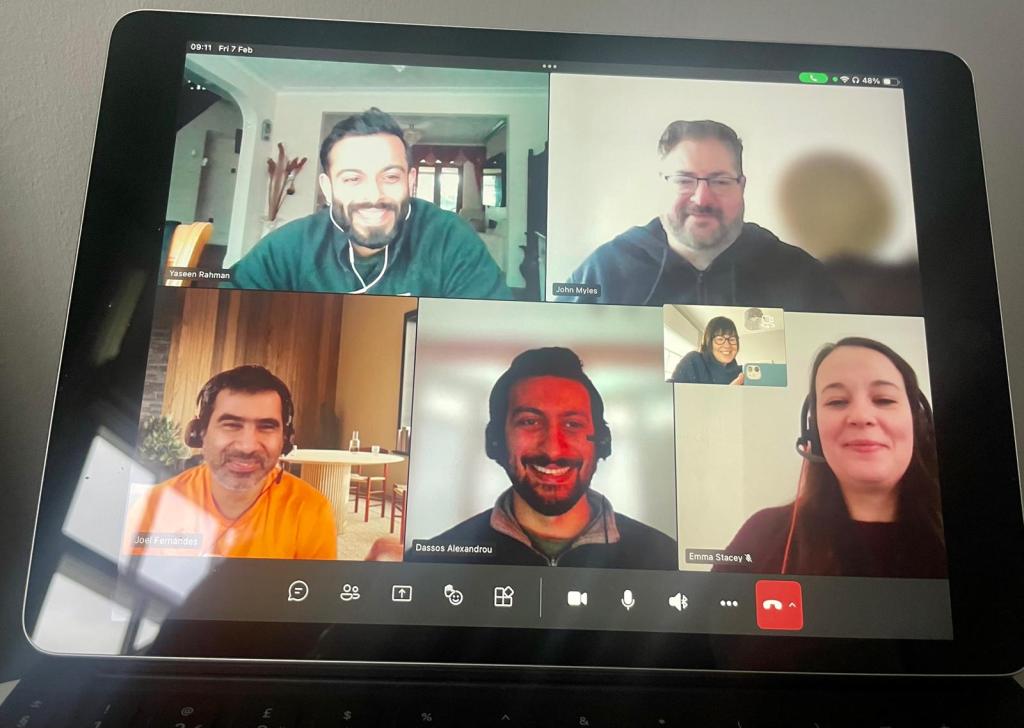
Picture of my Portfolio Management team at Reliance Bank. Thanks Yaseen Rahman, John Myles, Joel Fernandes, Dassos Alexandrou and Emma Stacey – proof that the journey from stormy to performing is absolutely worth it.



 Faye McDonough
Leave a comment