Have you lost your passion for reading?
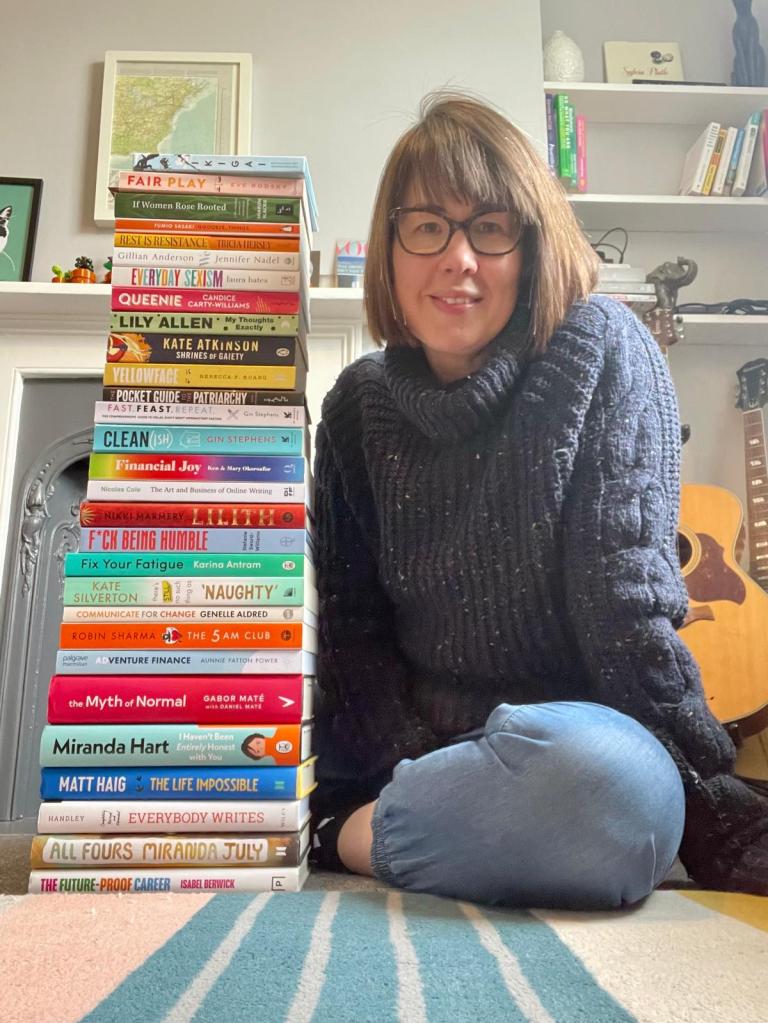
I’ve always been known as a “reader.” Whether it’s family, friends, or former colleagues, I’m often asked, “What are you reading?”
Last year, I realised I’d lost my mojo. Books were unfinished, unloved or taking FOREVER to read. Then something unexpected happened that completely transformed my reading experience and reminded me why books remain one of the most powerful tools for professional and personal growth.
When Reading Becomes a Struggle
The signs were all there: e-reader purchases based on algorithm recommendations, impulse buying of the latest releases, books sitting half-finished for months. I was consuming reading content rather than engaging with ideas that could genuinely change how I thought about work and life.
For someone who’d built a reputation as a reader, this felt like losing part of my identity. The joy had gone out of something that had always energised and educated me. Something I had such amazing memories of doing.
The Accidental Solution
Then, something changed… I left my e-reader on the train.
The switch back to hardback transformed my reading game. My bag was a little heavier, but my world felt brighter.
Sometimes the simplest changes create the biggest shifts. Physical books brought back the tactile pleasure of reading, the visual progress of pages turned, the satisfying weight of knowledge in my hands.
Rediscovering Reading Momentum
If you feel like you’ve lost your reading mojo, here are the strategies that have kept up the momentum:

1. Read Multiple Books Simultaneously
One novel, one non-fiction (work or health) and one personal development. That way, I’m always in the mood for one of them.
This approach matches my energy and interests to what I’m reading rather than forcing myself through a single book regardless of my mood – and it works. I’m getting through them!
2. Give Yourself Permission to Stop Reading
I learned this from Helen Tupper of Amazing If. It doesn’t often happen, but I stop if I’ve learnt enough, or I’m not feeling it.
3. Join a Reading Community
I joined a Book Circle and can’t promise every group will be as dynamic as mine, but reading in a community is a game-changer.
It has introduced me to books I never would have chosen and led me down a rabbit hole of countercultural authors I wouldn’t have discovered. Community reading adds accountability and diverse perspectives to your literary diet.
4. Model Reading at Home
I’m outnumbered in a house full of boys. It is LOUD. If I pick up a book though, the mood changes. Someone else does too or they might draw instead. That means more reading for everyone.
Your reflection: How could you create more opportunities for focused reading in your current environment? What would modelling good reading habits look like in your context?
5. Be Selective About Your Choices
The algorithm of the latest releases led to my e-reader impulse purchases. I don’t buy on impulse anymore. If a book interests me, it goes on the list for when I’m ready.
I also find inspiration from trusted sources – people whose recommendations have consistently led to valuable reads rather than random algorithm suggestions.
Not every book needs to be finished. Sometimes you extract the value early, sometimes a book just isn’t right for you at that moment. It has to be enjoyable for me these days.
Books That Change How You Work
If you do keep reading, you’ll inevitably find something that changes the way you work and think.
This one is mine.

“Four Thousand Weeks” by Oliver Burkeman. It influenced me at a critical point in my career and was a big driver behind my move from alternative finance to social impact lending. Also, as someone known for ‘getting stuff done’, it challenge my perception of productivity and most importantly, its value to me and others.
The Comfortable Realisations
When I was taking time out following a redundancy experience, this book:
- Reminded me that our time is finite
- Gave me permission to rethink how I spend my time – in life and work
- Put it all in perspective – if I’ve only got another approximately 1,000 weeks of work left, how do I want to spend them? You could even say that it led to setting up this corner of the internet.
The Uncomfortable Truth
Burkeman is brutal. Productivity is a trap: You’ll never get it all done!
If you are a planner, like to think ahead, be productive and get a lot done (like me), I’d recommend it as an essential must-read for this uncomfortable lesson told brilliantly over approximately 280 pages.
It challenged me to focus on my most strategically important work (Oliver suggests 10 tasks to focus on, I go for 3-5) and to make tough decisions on my priorities. It also encouraged me to keep a ‘done’ list which informs a lot of my monthly win reflections.
I read it pre-reading slump and it has stuck with me. It’s a book I’ve returned to repeatedly, each reading revealing new insights about how to approach work and productivity more thoughtfully, until I finally passed it on to a good friend last weekend.
Your reflection: Which book has fundamentally changed how you approach your work? What uncomfortable truths has reading revealed about your professional habits?
The Unexpected Joy of Forced Reading Time
Six unexpected hours on the Great British Railway earlier this year reminded me of reading’s simple pleasures.
At first, I thought “No problem. I’ve got plenty to do. I’ll crack on with work.”
But then I was reacquainted with reality:
- Train WiFi
- Little to no signal
- No charging points (what is that about?!)
All adding up to an unproductive workplace.
So this was my ‘survival pack’: a lukewarm black filter coffee, my reading specs, and “Wellness” by Nathan Hill.
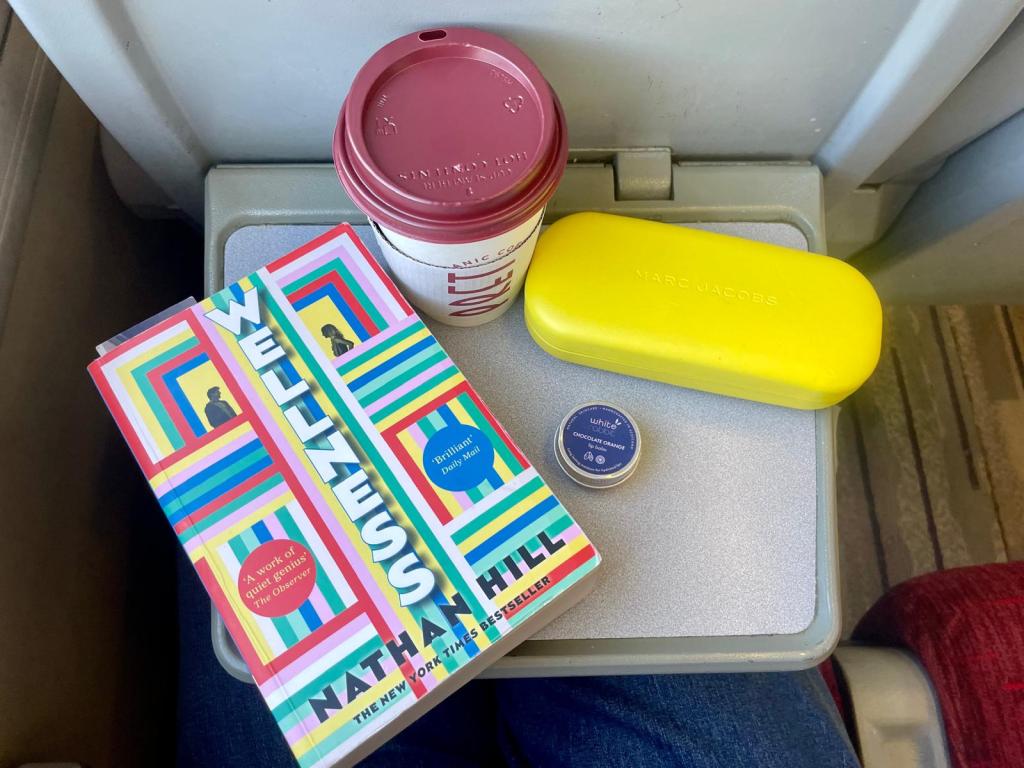
As a 45-year-old who also met her husband as a student in the 90s, the themes of “Wellness” ring true in this one. Epic in scope, covering wellness culture, parenting, social media algorithms, authenticity, gentrification and wealth inequality.
I loved it and I’m grateful for the time to get lost in the last 200 pages. Sometimes disruption creates exactly the space we need for deep engagement with ideas.
Your reflection: When did you last have uninterrupted time with a book? What would you need to create more of these focused reading opportunities?
What I’m Reading Now
Currently, I’m rotating between several books that reflect different aspects of professional and personal development:
For work insight: Books that challenge how I think about leadership, finance, and business strategy. My name is Barbra by Barbra Streisand fits the bill on this theme. What an absolute trailblazing leader she is.
For personal growth: Titles exploring wellness, relationships, and life philosophy. I’m reading Eastern Wisdom, Western Mind by Anodea Judith to build on the learnings from my Yoga Retreat. I’m enjoying the psychological themes coming together in a unique way.
For pure enjoyment: Novels that offer escape while providing insights into human nature and storytelling. At the moment, that’s Demon Copperhead by Barbara Kingsolver. It has been recommended to me over and over.
This variety keeps reading fresh and ensures I’m always learning something relevant to my needs and interests right now, even if it takes a while to finish them.
Questions for Your Own Reading Practice
As you think about your relationship with reading and development:
- What book has most significantly changed your professional perspective?
- How do you balance reading for work with reading for pleasure?
- What barriers currently exist to your reading practice?
- How could you create more community around your reading?
- What would a more intentional approach to book selection look like for you?
The Lasting Impact of Thoughtful Reading
Reading remains one of the most powerful tools for professional and personal development when approached thoughtfully. It’s not about consuming as many books or indeed, new ideas as possible, but about engaging deeply with concepts and thoughts that challenge and expand your thinking.
The books that stick with us – like “Four Thousand Weeks” for me – are often the ones that make us uncomfortable, that challenge our assumptions about how we work and live.
Which book would you most like to get stuck on a train with? I’m always here for recommendations that have genuinely changed how you think about work, life, or both.


 Faye McDonough
Leave a comment