Have you ever felt like the goalposts of management keep moving, but no one sent you the memo?
You’re managing your team based on one set of expectations while your organisation quietly operates from an entirely different playbook. It can feel like pressure from all sides.
What I’ve noticed
Economic challenges and technological shifts have been relentless over the past five years at least.
This constant change has pulled focus from the fundamentals of good management as Executive Committees, Boards, and HR teams have been in crisis mode.
I’ve led customer-facing teams since 2011 in Financial Services – from start-ups to large corporates, always in highly regulated environments.
I’m passionate about leading teams well because good leadership genuinely impacts people’s enjoyment of work – and by consequence, their lives. That responsibility is why I come to work.
When I contributed to a piece in People Management magazine in 2024 about the realities of being a manager, I was asked about several key issues:
- How do you think management has changed over the past few years – what is more/less challenging now?
- How can managers deal with this?
- How do you think HR teams can best support people managers?
- What do you think is the hardest part of being a manager today
As I reflected, the contrast was stark – the day-to-day reality now versus when I started my first leadership role felt completely different. That’s when it hit me: the role of middle manager has never been more important, but the support hasn’t kept pace.
The Shift I’ve Witnessed
In considering my response, I reflected on my experience, particularly in scale-up businesses. These were often organisations with less than a hundred people, demanding shareholders, and stretching growth strategies in challenging regulatory contexts. It’s where change is addressed quickly but also felt the most.
In truth, that’s what had drawn me to it – the ability to take action and get things done. But it’s also where you see the impact on people more clearly.
What I’ve witnessed is growing burnout at all levels, alongside increasing individual anxiety and loneliness. And this isn’t just at an employee and managerial level. I’ve seen the most brutal impact on senior executives.
This is supported by recent data from the Institute of Internal Communication in partnership with Ipsos Karian and Box. It tells a story of rising burnout, especially among leaders, a need for employees to be heard and a desire for a more human approach to communication.
The shift is evident:
- Just 51% feel leaders demonstrate empathy and understand the challenges they face
- Only 41% say their employer has clearly explained how generative AI is used responsibly in their organisation
- 54% of employees who want their organisation to take a stand on something select mental health as a priority
The shift has been profound in my own leadership career – from intentional culture building in let’s be honest, much smoother economic times to reactive crisis management today. This change affects every aspect of how organisations operate
Your reflection: Does this resonate with what you’re experiencing in your workplace? Have you noticed similar patterns of burnout and pressure across different levels of your organisation? What’s changed most noticeably for you as a manager or team member?
The changes have been noticeable across multiple areas.
I’ve spotted multiple examples in my own career.
- Where there was once a focus on gender equity through a deliberate, transparent pay strategy, an all-male sales team was hired to deliver urgent growth targets without applying those same pay principles. Beyond the gender imbalance, the individuals were strikingly similar in personality type.
- Female role models who were visible and accessible stepped back from the workforce, both by choice and circumstance.
- Workplace culture experts who were once engaged proactively for hiring and team chemistry were called upon reactively to manage difficult transitions/conversations and redundancies.
- Learning and development initiatives still happen, but there’s limited capacity to embed the learnings, drive engagement, attendance or completion of the programme, or follow up on action points properly.
- Where there were once focused, strategic initiatives, there are now multiple change programmes launched in response to economic pressures – and the workload is overwhelming, risking how impactful they will be in the end.
It’s not that any of these individual decisions are inherently wrong – organisations have had to make tough choices to survive and adapt.
But the cumulative effect has been a shift from building sustainable practices to managing immediate challenges. The contrast is what struck me most when reflecting on my experience. It was like night and day.
This contrast has become even clearer in my new role where I’m building a new organisation from the ground up – and reflecting on it now, it becomes even clearer why starting from scratch was so appealing.
It’s a unique position – being able to establish management practices deliberately rather than trying to course-correct in the middle of ongoing challenges. Starting with a blank sheet of paper to create an organisation we can be proud of.
What’s Really Happening
Crisis management has understandably taken the focus away from the basics. For instance, how much time and energy have we seen wasted debating working location (remote, hybrid, or flexible)?
I’ve seen all extremes applied: rigid expectations and complete flexibility. Neither approach worked because the focus was on the policy rather than the relationship. Both produced an identical outcome and contributed to an erosion of loyalty and trust between employee and employer, regardless of which direction organisations chose.
The issue wasn’t the working arrangement itself. It was that decisions were made without involving the people who had to make them work: the middle managers and their teams – often supported by insufficient communication.
But the basics never change for me: quality, regular, employee-focused 1:1s, a team meeting approach that adds value, thoughtful internal and external communication, clarity over product offering with stability and a long-term approach to achieving growth or profitability.
These fundamentals matter more than location policies, but they’re often the first things to slip when organisations are in crisis mode.
Your reflection: What policy changes have you experienced in your workplace recently? How much input did you have as a manager in implementing them, and how did that affect your team’s response?
The role of the middle manager has never been more important.
They have to communicate decisions or policies which they may not agree with or may not have the autonomy to challenge.
I’ve watched capable managers become frustrated and burnt out, never because of their teams, but because they’re caught between conflicting expectations from above and below. They’re expected to be advocates for policies they weren’t consulted on, while maintaining trust with teams who see them as responsible for decisions they didn’t make. It’s a minefield.
What Actually Helps
A better investment is ensuring the management team can deliver those basics that are so important.
HR can better support managers by recognising their importance within the organisational structure and making them the focus of their initiatives using actions such as:
Developing Foundational Skills
- Reinvigorating the basics of management – quality 1:1s, providing feedback. These fundamentals create the foundation for everything else, but they’re often assumed rather than taught or supported.
- Creating training programmes for accidental managers – Many people find themselves managing without ever choosing it or being prepared for it.
- Providing a development structure – Clear pathways for growth that go beyond “you’re good with people or your technical skills are sound, so you can manage.”
Building Support Systems
- Providing wellness and health & wellbeing support to managers – Managers are often expected to support their teams’ wellbeing while their own goes unaddressed. This needs to move to the top of everyone’s lists.
- Creating peer support and mentoring opportunities – The management population is often lonely, caught between senior leadership and their teams with few people who understand their specific challenges. If you can’t create peer support internally, there are so many external industry-specific, often free mentoring programmes – use them!
- Creating structured follow-up for learning initiatives – Ensure development programmes include implementation support and progress tracking. Assign accountability for embedding new skills and create space for managers to practice and refine what they’ve learned. Learning without application is just expensive consultation and valuable time away from the desk.
Improving Decision-Making & Autonomy
- Providing autonomy or approval within a certain framework – Managers need to know what decisions they can make independently and what requires approval, rather than guessing, asking permission for everything or getting trapped in long approval processes with no clear outcome or decision.
- Including managers in decision-making processes – Consult middle managers before implementing policy changes that affect their teams. They understand the practical implications better than anyone and their buy-in is essential for successful implementation. When managers are involved in shaping decisions, they become genuine advocates rather than reluctant messengers.
Stick to Long-term Organisational Commitments
- Returning to proactive culture investment – Move beyond using external specialists only for exit processes and redundancies. Reinvest thoughtfully in proactive culture work – team dynamics assessments, culture interviews during hiring, and regular culture health checks. They won’t all be an option financially but prevention is always more effective and less expensive than crisis intervention.
- Protecting diversity and inclusion commitments during challenging times – Economic pressure shouldn’t be an excuse to abandon equity principles. Crisis decisions often have long-term cultural consequences that are harder to undo than they were to implement. Maintaining diverse hiring practices and transparent pay strategies during tough times actually strengthens organisational resilience.
Great Executive, Board and HR Teams will be doing a lot of this. This isn’t intended as criticism – rather a reminder of the basics and the impact they can have. It’s easy to lose focus and there are many distractions right now.
Questions for Your Own Reflection
- What changes have you noticed in management expectations over the past few years? Are you being asked to do things that weren’t part of the role before?
- Where do you feel most supported as a manager, and where do you feel most on your own? What could you do to change that?
- What “basics” of management do you think get overlooked when organisations are in crisis mode? Which “basics” do you excel at and what could you do more of?
- How do you maintain trust with your team when you’re implementing decisions you weren’t consulted on?
- What would better support for middle managers actually look like in your organisation? What would make the biggest practical difference? If it can’t be found internally, how could you source it elsewhere?
What’s been your experience with the changing expectations of middle management? I’m particularly interested to hear from managers who’ve been in their role for a few years – what feels different now compared to when you started?
And if you’re in HR or senior leadership, I’d love to hear your perspective too. I know you’re already doing so much of this work. If you were to reinvigorate one of these, which would make the biggest difference to your organisation?
This topic matters to me because I believe good management changes people’s working lives fundamentally.
When we don’t support our managers properly, we’re not just letting them down – we’re affecting everyone they lead. And that ripple effect touches every part of an organisation.
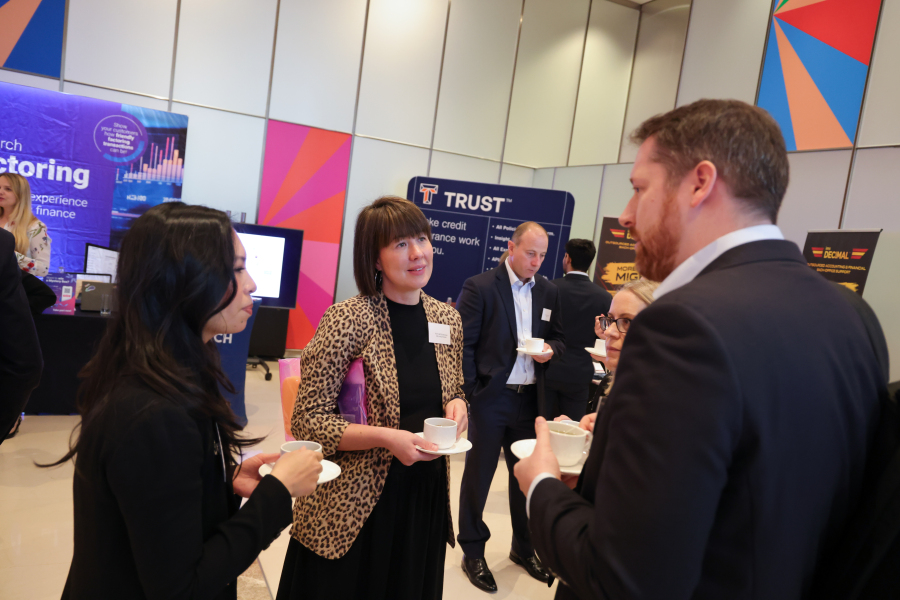
Picture from a coffee break at the RFIx2025 Conference, talking unsurprisingly leadership through change!




 Faye McDonough
Leave a comment