Ever found yourself nodding along to another “disrupt everything” LinkedIn post whilst secretly thinking, “But what about the basics?”
You’re not alone.
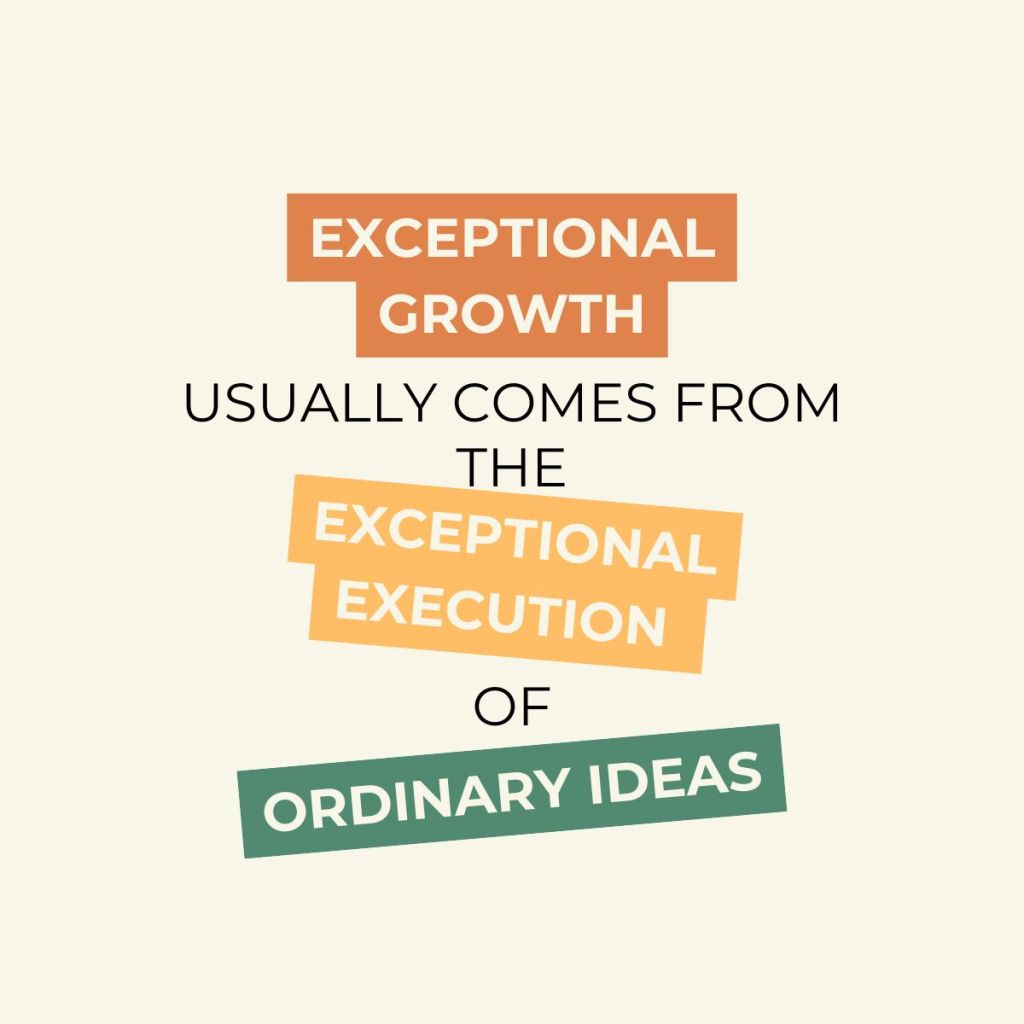
After years in finance and watching countless businesses navigate growth, failure, and everything in between, I’ve realised that the most valuable business wisdom rarely makes it into the motivational quote graphics (so I’ve made one here!)
This reflection comes from recent conversations with friends venturing into entrepreneurship, colleagues grappling with scaling decisions, and my own journey through the less glamorous but absolutely essential aspects of business leadership.
What I’ve learned is that sustainable success comes from mastering fundamentals, making thoughtful trade-offs, and knowing when to say no – even when it’s uncomfortable.
Here are my thoughts on these three areas.
The Growth Myth That’s Holding Us Back
Lately, I’ve been questioning the “grow at all costs” mentality that dominates so many business conversations.
I think the focus on original, innovative ideas and hockey stick revenue projections is overrated. I’ve watched businesses with those classic steep growth expectations collapse because they neglected the boring stuff that actually matters.
What I’ve seen work consistently is focusing on unexciting fundamentals first.
When I inherit a team, the first thing I do is establish what I call “The Essentials”: simple weekly routines that are documented rather than just talked about, clear role objectives so everyone knows what’s expected, Monday kickoffs and Friday check-ins that people actually look forward to, reporting that shows what’s working and what isn’t, and quality, regular one-to-ones.
For a while, I lacked confidence in this approach. I’d question whether it really is that important but over the years, I’ve realised. Yes it is – and I’ve seen the results.
This approach delivered 43% pipeline growth, 340% increase in enquiries, and 65% more lending deployed in just nine months. Not through revolutionary innovation, but through focusing on the exceptional execution of ordinary ideas.
Your reflection: What “boring” operational improvement could transform your current situation? Sometimes the unsexy fundamentals deliver the most dramatic results.
The Art of Strategic Trade-Offs
The real challenge of growth isn’t just making decisions. It is often choosing between seemingly opposing options that both feel essential.
These dilemmas are constant: short-term wins versus long-term sustainability, impressive monthly numbers versus building something that lasts, speed versus quality.
Leading teams in financial services, I’ve often inherited portfolios where rapid expansion was prioritised over proper risk management. The fix is never pretty and I’ve had to completely rebuild customer relationships and risk assessment from the ground up.
But that painful reset led to zero bad debts and 100% growth in customer balances once the proper foundations were established – I was very happy with that.
Recently, I chose quality over speed for a critical technology infrastructure project. What was scoped as three months stretched to twelve, testing stakeholder patience. But the results were transformative: month-end reporting time slashed from three days to three hours and dramatically improved risk visibility.
Sometimes I’ve made counterintuitive calls, like investing in people before we had the loan book to justify it. This “premature” talent investment created the capacity to power that 65% increase in lending.
Other times, I’ve recommended pausing recruitment whilst we aligned processes and improved job satisfaction for existing team members. I wasn’t comfortable onboarding more people until we improved engagement for those already there.
Your reflection: What trade-off are you avoiding right now because both options feel necessary? The best decisions often aren’t about choosing between growth and stability – they’re about sequencing correctly.
The Power of a Thoughtful No
When someone learns I work in finance, it’s not unusual to be pitched for funding right there and then. From kids’ birthday parties to supermarket aisles, I’ve even discussed unsecured overdrafts whilst red-faced and post-workout!
Since moving from High Street banking to specialised lenders in 2017, I’ve consistently seen conversion rates below 10% from initial enquiries to funded deals.
This taught me the importance of saying no quickly and kindly, but more importantly, turning every no into an opportunity to add value. Something more than just introducing the organisation to another lender (though you should always do that)
Here’s how I try to make every conversation count:
- Sharing industry knowledge including regulatory insights and market context to shape ideas
- Providing financial guidance by reviewing the numbers and identifying missing basics like balance sheets or realistic forecasts
- Offering strategic support by clarifying lending requirements and helping to demonstrate repayment capability
The finance world is complex and overwhelming. If I’m not generous with my knowledge and experience, what’s the point?
Your reflection: How could you create value in conversations where you can’t directly help? Your expertise becomes more valuable when you share it thoughtfully, even in situations where you can’t be the solution.
Building Confidence with Numbers
“Can I run these numbers past you?” I get asked this surprisingly often, and I always under-appreciate my confidence with financials and the context they provide in business. Maybe that’s because working with numbers hasn’t always come easily, especially when switching products and sectors.
One career move involved switching from lending to loss-making, high-growth recurring revenue models with multiple investors to charities with restricted funding models and insufficient resources. This required learning new financial languages and frameworks – it wasn’t straight forward but it was invaluable.
Everything I’ve learned from understanding accounts has taught me:
- The importance of figuring out the story in the numbers
- The art of asking lots of questions and challenging answers without being annoying
- How to and how not to make money
- The life benefits of managing money well
- The importance of resilience when concepts are hard to understand.
For friends venturing into entrepreneurship, I always emphasise mastering these fundamentals.
- Get comfortable with profit and loss statements, balance sheets, and cashflow statements through whatever learning method works for you.
- Take ownership of your finances rather than delegating responsibility blindly to accountants.
- Prioritise cash management and lean operations, especially during startup phases.
- Develop comprehensive financial strategies with projections and what-if scenarios grounded in reality.
Your reflection: Where are you avoiding getting comfortable with numbers in your role or business? Building financial confidence isn’t just about accounting – it’s about understanding the story your business is telling.
The Reality Check on Business Survival
A recent conversation about entrepreneurship led me to explore current business survival rates. The common belief that “one in two businesses fail” isn’t quite accurate. UK Office for National Statistics data shows that 80% of businesses survive their first year, 60% make it to year three, and 40% reach their fifth year.
These statistics remind me that while entrepreneurship involves risk, it’s not the impossible gamble it’s sometimes portrayed as.
Success comes from practical preparation:
- Understanding your numbers
- Building strong support networks
- Managing cash flow religiously
- Making decisions based on data rather than optimism alone.
The entrepreneurs I see succeed aren’t necessarily the most innovative or the biggest risk-takers.
They’re the ones who do their homework, build solid foundations, and make thoughtful decisions about when to invest, when to wait, and when to pivot.
Questions for Your Own Reflection
- What “boring” operational improvement could you implement this week that would create meaningful impact in your role or business?
- What trade-off are you currently avoiding because both options feel equally important? How might you approach sequencing these decisions differently?
- Where could you create more value by sharing your expertise, even in situations where you can’t directly help?
- What aspect of business numbers or financial management are you avoiding that could strengthen your confidence and decision-making?
- If you had to explain your business or role’s financial story to someone unfamiliar with your industry, what would be the most important points to cover?
The most sustainable business growth comes from mastering fundamentals, making thoughtful trade-offs, and building genuine expertise you can share generously.
It’s not as exciting as disruption narratives, but it’s far more reliable.
What’s the piece of practical business wisdom you wish you’d learned earlier? I’d love to hear your experiences in the comments – particularly the unglamorous lessons that made the biggest difference to your success.






 Faye McDonough
Leave a reply to July Wins: From Writing Flow to Real-World Impact – Faye McDonough Cancel reply