“You’ve really landed on your feet,” a friend said to me recently, when we were talking about my new role and current mix of day job and board roles.
I smiled and nodded, but inside I was thinking about how that phrase captures everything people don’t see about career transitions. It suggests luck, a quick bounce back, maybe even ease. ‘Landed on my feet’ isn’t the story here, believe me!
What she couldn’t see was several intense years of deliberately repositioning my career around scaling and purpose, supported by strategic choices about board roles and community involvement that have broadened my experience – plus plenty of deep thinking of course.
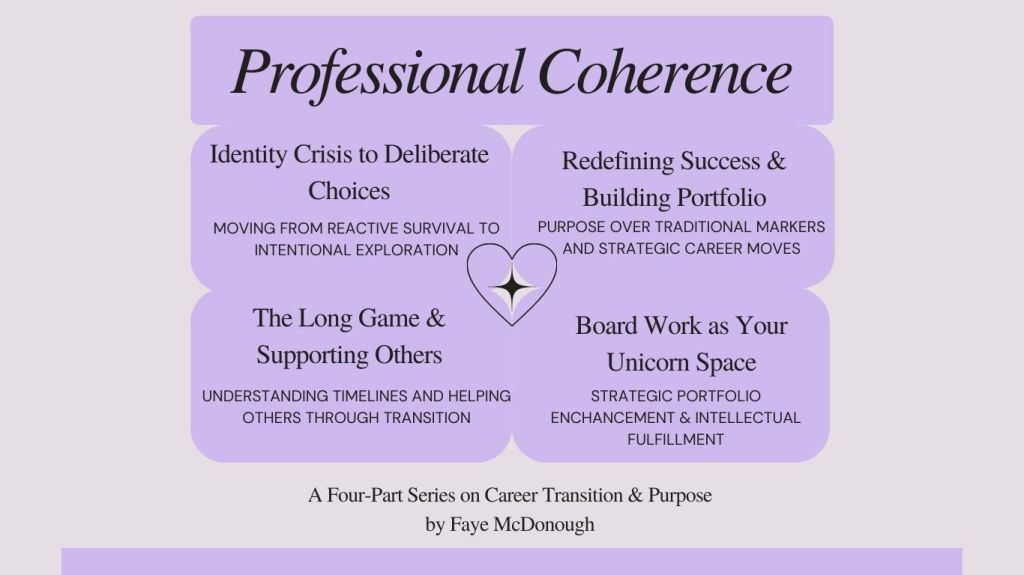
This is what I call professional coherence – the intentional alignment of your career choices with your values and purpose, especially after a significant disruption. It’s how I’ve come to think about my most recent career chapter.
Professional coherence means learning to walk in a completely different direction, rather than simply bouncing back to where you were.
Over four articles, I’ll share what I’ve learned about building professional coherence through the different phases: moving from identity crisis to deliberate choices, redefining success while building your portfolio, understanding the long game of career transition and shining a spotlight on board work as an area to explore.
The Identity Void: When Work Defines You
My identity crisis and disruption came through restructure and redundancy.
I’ve been through redundancy twice, with completely different experiences and perspectives each time. The first taught me about reactive survival.
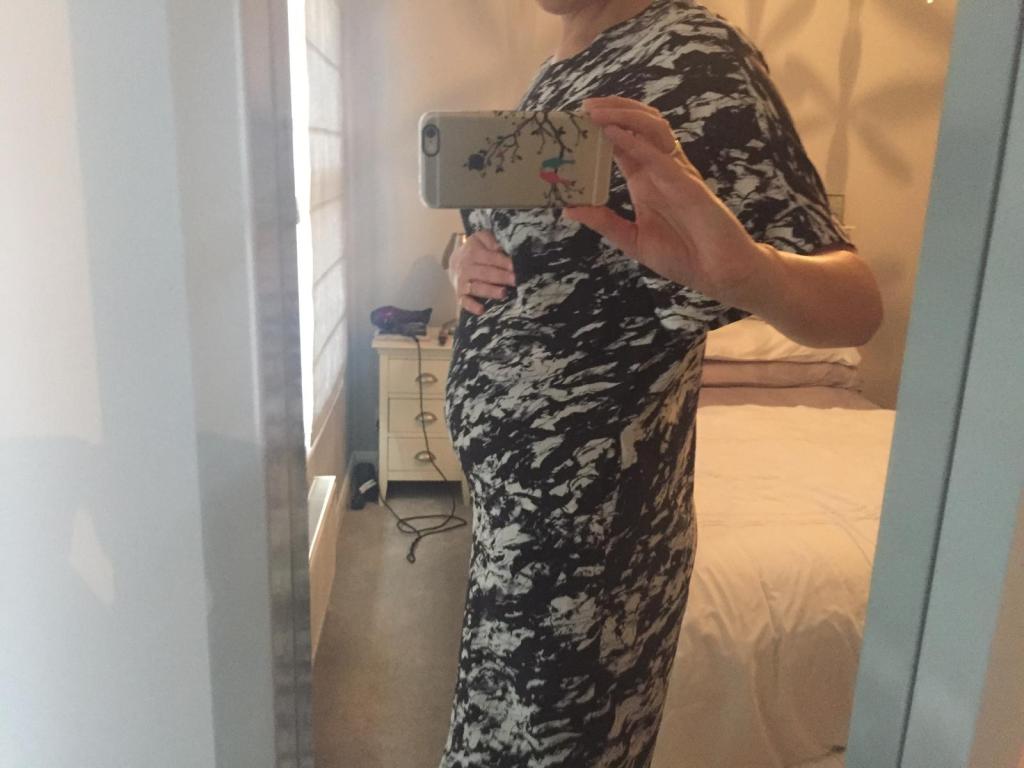
Redundancy 1 hit when I’d only been back at work for six months after maternity leave. I was already figuring out who I was in early motherhood, and suddenly I was figuring out who I was without the job and the corporate badge that had defined me. I was mostly scared and embarrassed. The identity void felt enormous.
It showed me that high performance and a great reputation don’t protect you from redundancy and restructure and that accepting the uncontrollable is the path through.
When I was faced with the choice to stay in a role that wasn’t right or take redundancy and an unknown future, I listened to my gut and said goodbye – even though it was terrifying.
When your professional identity gets pulled away unexpectedly – whether through redundancy like me or another significant disruption – especially during an already vulnerable time, it forces you to confront some uncomfortable questions:
Who am I if I’m not this role? What am I actually good at? What do I want to do next?
The temptation is to fill that void as quickly as possible with another similar role – I’ve seen many former colleagues do just that. But that void might actually be showing you something important about the life you’ve been building.
Your reflection: When you think about your current role, how much of your identity is wrapped up in your job title or company? What does that say about the person you want to be? What would remain if that was taken away?
From Reactive to Intentional: Learning to Choose
The second redundancy taught me about choice.
By the time it came around five years after the first, I had savings to fall back on and the awareness that I needed to rest after years of leading in scaling businesses while raising small children.
I had learned that career disruption could be an opportunity rather than just a crisis and so this time, I approached it completely differently:
I took a break. Instead of immediately jumping into job search mode, I went outside, exercised, cooked, and listened to a lot of Radio 4. I gave myself permission to slow down and think. That time and space became something I still reference when life gets too busy.
I communicated honestly. Rather than spinning a story about “exciting new opportunities,” I was refreshingly honest about taking time to figure out what was next. Through that honest sharing, I built better, deeper relationships and had more meaningful conversations about career challenges.
I embraced creativity. While I wasn’t taking practical action with job searching, I was thinking about what’s next in a broader sense. I’ve acted on those ideas I had during that creative time over the last three years. They’ve led to roles with purpose, to Non-Executive Director and Board Trustee roles and to the community volunteering that has become integral to my professional identity.
The difference between the two experiences wasn’t just about having more financial stability (though that helped enormously). It was about shifting from reactive survival mode to intentional exploration mode. Still scary but with a sense of the opportunity offered to do this differently.
Filling the Space Deliberately
The space between jobs – whether it’s three months or three weeks – is rarely empty. The question is whether you’re filling it deliberately or just letting it fill with whatever comes along.
Second time around I focused on creating space for conversations and thinking, away from the noise of the world. The laptop stayed closed and reading took a back seat.
In the end I took six months out (which was both too long and not long enough) but it set the tone beautifully for what was to come.
Through that space, I realised that slowing down had to become a weekly essential, not something I waited for during a fortnight’s holiday.
I learned that leaders around me were making health and wellbeing their top priority in ways that felt like new territory, something new to take into the next career move. The conversations I was having weren’t just New Year’s resolutions – they were fundamental shifts in how people wanted to approach their careers. Achieving a perfect balance where everything slots into place is unachievable but more and more people around me were trying and that’s where the joy and learning is.
Second on the list was purpose. Whatever I did next had to be worth it. A way to use my skills for the benefit of others in a way that excited me – although I had no idea what that could be yet.
Your reflection: If you had three or six months between roles right now, what would you want to explore? What questions about your career direction would you want to answer? What would you want to reflect on?
The Foundation for What’s Next
Looking back, that second redundancy did something I hadn’t expected.
The break, the honesty, the creative thinking – yes, it was about recovering and finding another job but I was also starting to think about and build a professional identity that was my own. Something that could weather future changes and align with what I actually cared about. Finding a way to be more real and to be more ‘me’.
That foundation has played a big role in what I’m creating online here too.
Some seeds for my future development were sown first time around:
- The networking I did on my own (scary but game-changing at the time) taught me I could turn up to anything solo.
- The academic approach to job searching that helped me feel in control created documentation I still reference and an ownership of my own career.
- The coach I hired became a long-term relationship that shaped how I think about career development. (Shout out to Kat Hutchings!)
But the biggest shift in that second experience was confidently recognising that redundancy isn’t a reflection on your performance – it’s often a reflection of business circumstances beyond your control.
Your worth isn’t determined by organisational restructuring and the deliberate choices you make afterwards can be truly transformational.
Questions for Your Own Reflection
Whether you’re currently between roles, considering a change, or just thinking about professional coherence in your own career:
- What would intentional career transition look like for you? How could you approach your next move proactively rather than reactively?
- Where have you been filling professional spaces with ‘shoulds’ rather than choices? What roles, commitments, or directions have you fallen into rather than deliberately chosen?
- What questions about your career direction are you avoiding? What would you explore if you gave yourself permission to think creatively with no restrictions?
- How could you start building professional coherence now, even if you’re not between roles? What small shifts could align your current work more closely with your values?
- Who in your network has navigated career transitions thoughtfully? What could you learn from their approach?
The goal isn’t to land on your feet after a career disruption. That’s rarely how it works.
The goal is to learn to walk with intention toward something that makes sense, not just for who you’ve been but for who you want to become.
Next week, I’ll explore how redefining what success means to you and building your own professional portfolio become essential parts of bringing this all together.
What’s been your experience with career transitions? I’d love to hear how you’ve navigated the space between one role and the next, and what you’ve learned about filling that space deliberately.
This is Part 1 of a four-part series on Professional Coherence. You can read more at fayemcdonough.com and join the conversation about career development, leadership, and finding purpose in your professional journey. Add your email to be notified when I publish.
You can read Part 2 here and Part 3 here


 Faye McDonough
Leave a comment